
Basics for Homeowners and Landscape Professionals
Herbicides can be effective tools for controlling weeds in the landscape, however they may injure trees, especially when improperly applied.
Herbicide Damage Symptoms
Damage symptoms vary with the type and concentration of herbicide, the plant exposed and its stage of growth, and environmental factors. Common symptoms may include:
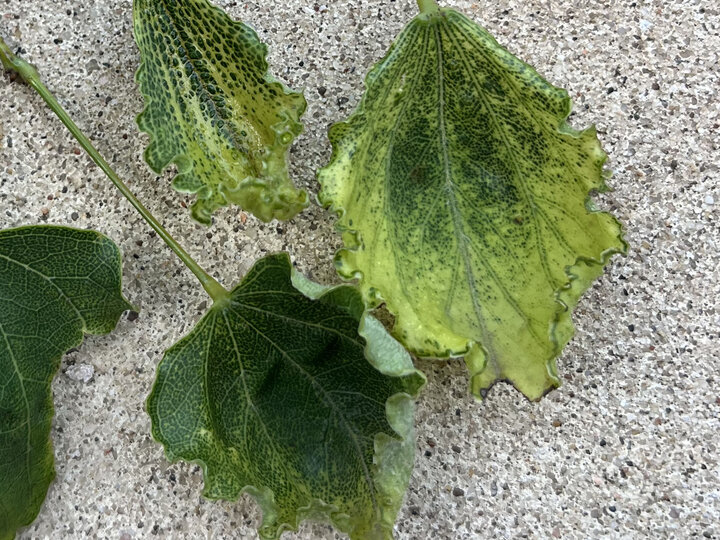
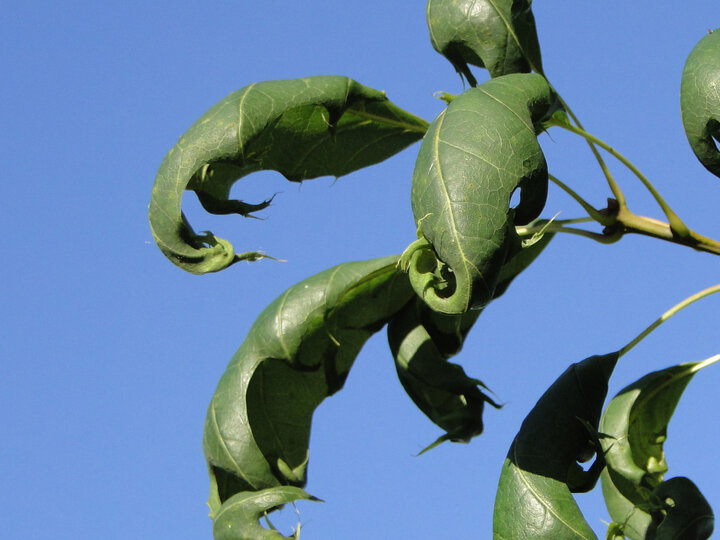
- Leaf cupping, curling, twisting, puckering, strapping (narrow, elongated growth)
- Twisted, curled, stunted, or abnormally elongated stems
- Clusters of stunted shoots or leaves
- Discolored foliage: yellow, white, reddish, or abnormally light or dark green
- Leaf browning; leaf drop
- Death of branches or entire tree
Herbicide-injured redbud leaves
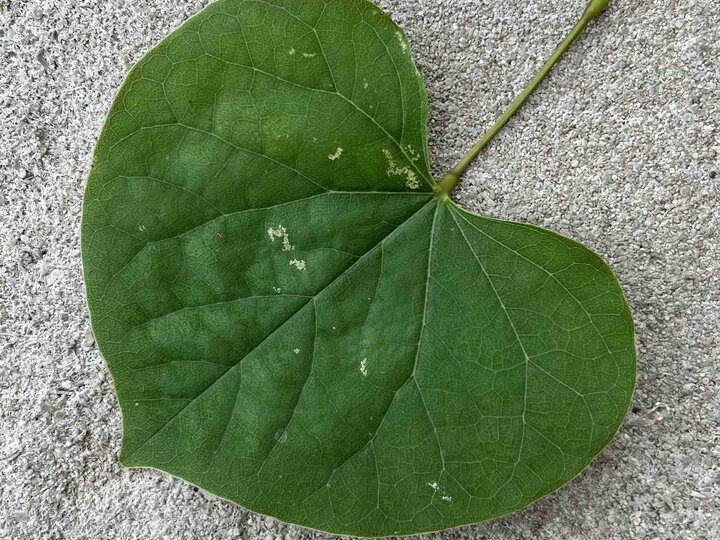
Normal redbud leaf
Herbicide-injured oak leaves
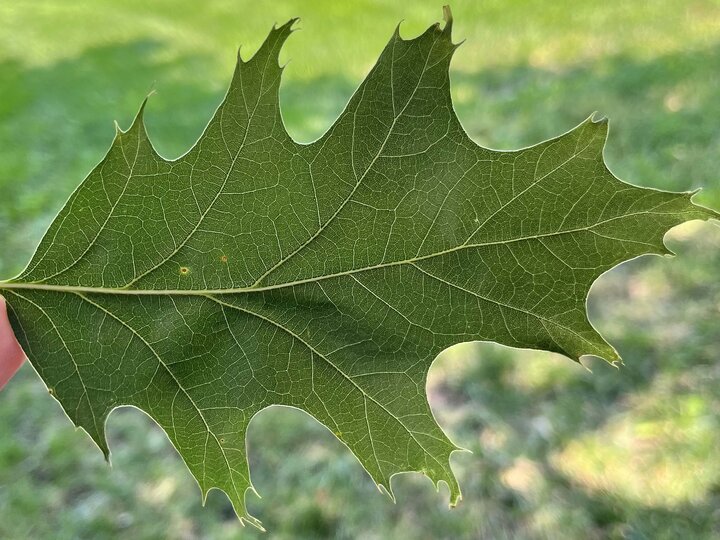
Normal oak leaf
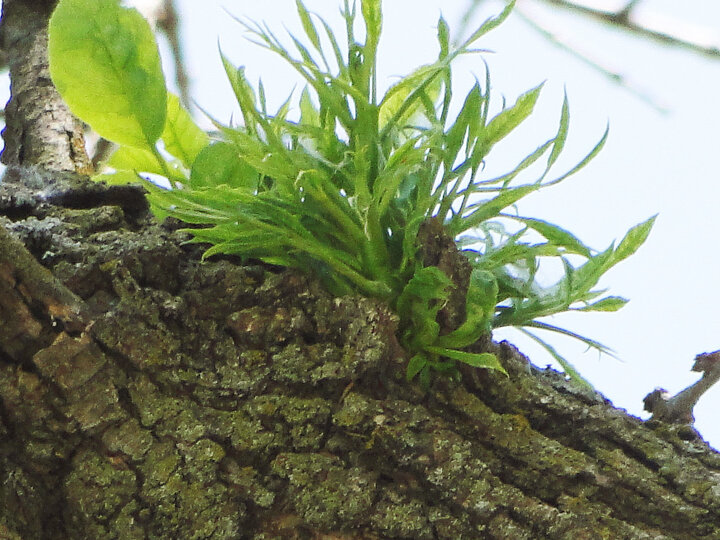
Cluster of stunted shoots (ash)
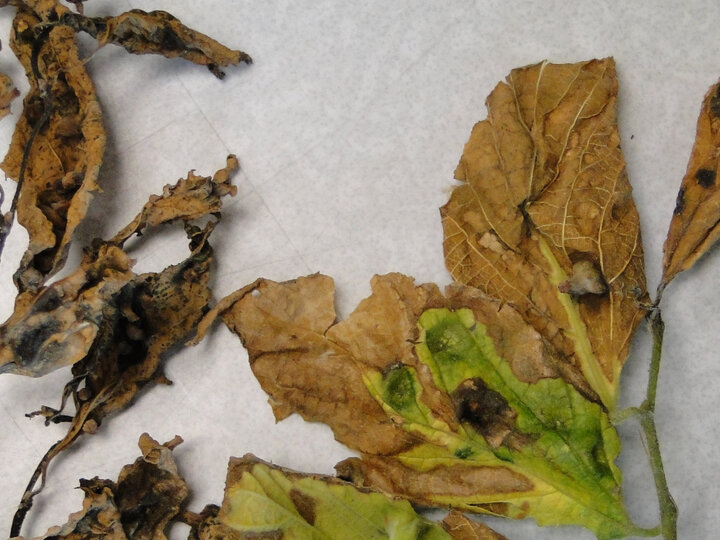
Leaf browning (hackberry)
Common Routes of Herbicide Uptake by Trees
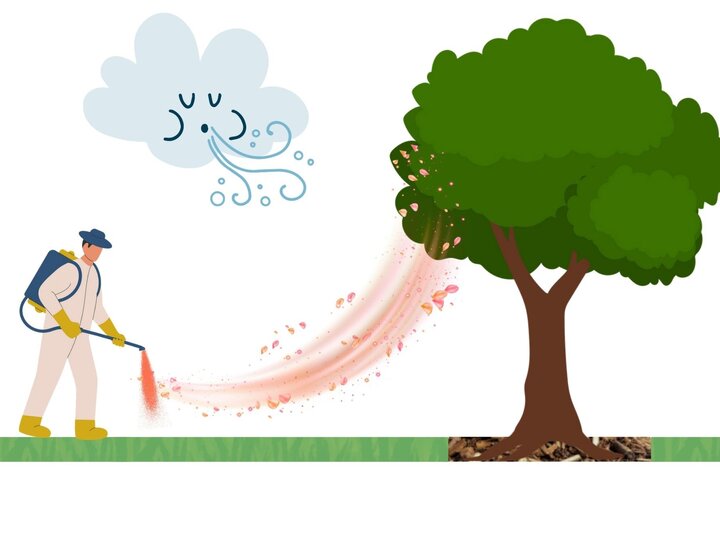
Spray Drift
Spray drift occurs when spray droplets are carried by the wind away from the intended application site.
Plants downwind of the application site are often damaged on windy days.
Smaller droplets drift farther than large droplets, and droplet size is dependent on the spray equipment. Higher pressures and nozzles with small openings produce finer sprays, which are more prone to drift.
Vapor Drift
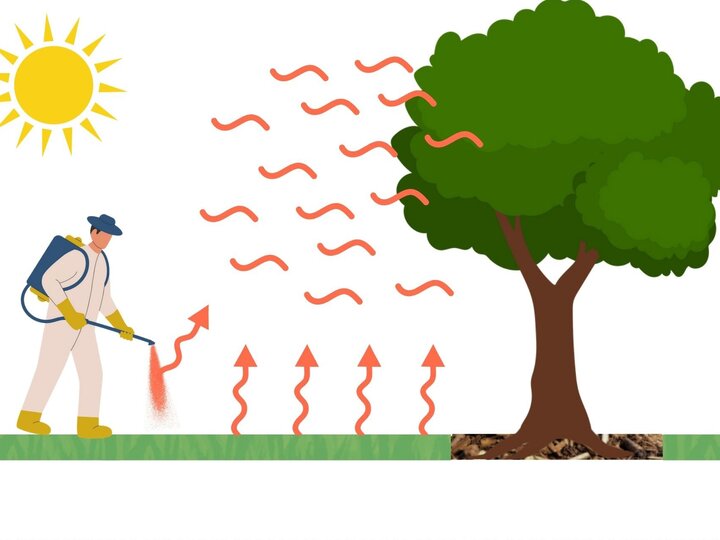
Some herbicides are volatile, forming a gaseous vapor during and following application— sometimes even days later.
Volatile herbicides can drift very long distances as a vapor. Warm temperatures increase volatility.
Many common lawn herbicides are volatile, especially those used to control broadleaf weeds such as dandelion, clover, ground ivy, kochia, spurge, and others.
Root Uptake
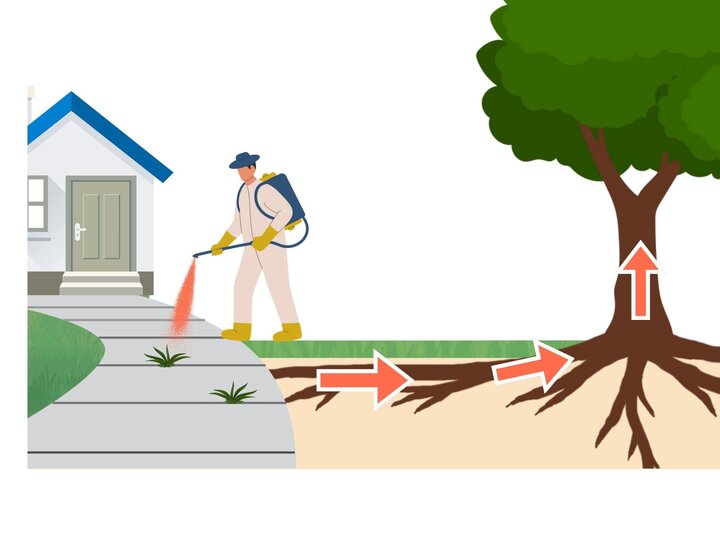
Tree damage can occur through root uptake of herbicides in the soil such as those used to keep the ground “clean” long term along fence lines, near buildings, and on sidewalks and driveways.
Also included are many herbicides used for woody brush control or for treating stumps.
Trees located relatively far from the application site may be affected since tree roots can extend underground well beyond the tree canopy.
Root uptake by trees can occur with many lawn herbicides when applied at too high a rate.
10 Tips for Avoiding Tree Injury
- Foremost rule: Always read and follow all herbicide label directions. The label provides instructions that help limit drift, vaporization, and runoff. Look for precautionary statements regarding trees.
- Always mix and apply herbicides at the rate recommended on the label. Overapplication may result in tree injury.
- Do not spray on windy days. Winds should be very light: between 3 and 10 mph.
- Adjust sprayer nozzles to produce a coarse spray (large droplets) to help limit drift.
- Apply volatile herbicides like 2,4-D and dicamba when temperatures remain below 85 degrees F for 24 hours following application to limit vaporization (2 days better).
- Much damage occurs in spring and summer when trees are actively growing. Shift weed control to fall when many weeds such as dandelion, clover, ground ivy, violet and henbit are better controlled, and damage to trees is reduced.
- Spot-spray whenever possible; or just accept a few weeds in the lawn.
- Keep in mind that some tree roots may extend horizontally 2-3 times the height of the tree (or more)—well beyond the canopy.
- Do not spray root or trunk sprouts (suckers), exposed tree roots, or the trunks of trees--especially young trunks with thin bark.
- When possible, use alternate methods of weed control such as mulching, cultivation, and mowing or pruning weedy tree sprouts.
What’s in Your Herbicide?
The front label of the herbicide container lists the active ingredients. Common ingredients that frequently injure trees include (there are many others):
2,4-D and Dicamba:
- Found in many lawn herbicides, as well as products used in brush control.
- Should not be applied when warm temperatures (85 degrees F) are expected.
- Easily drift as a vapor.
Picloram:
- Used in stump treatments and woody brush control.
- Easily moves out of the roots of treated stumps or brush into the soil where roots of desirable trees pick it up.
- Can cause serious tree damage or death.
Many other active ingredients can injure trees. Read and follow the label carefully. Using a pesticide in a manner inconsistent with its label can cause unintended injury to not only trees and other desirable plants, but also people, pets, and wildlife. The label is the law.
This publication was produced in collaboration with the Nebraska Community Forestry Council.