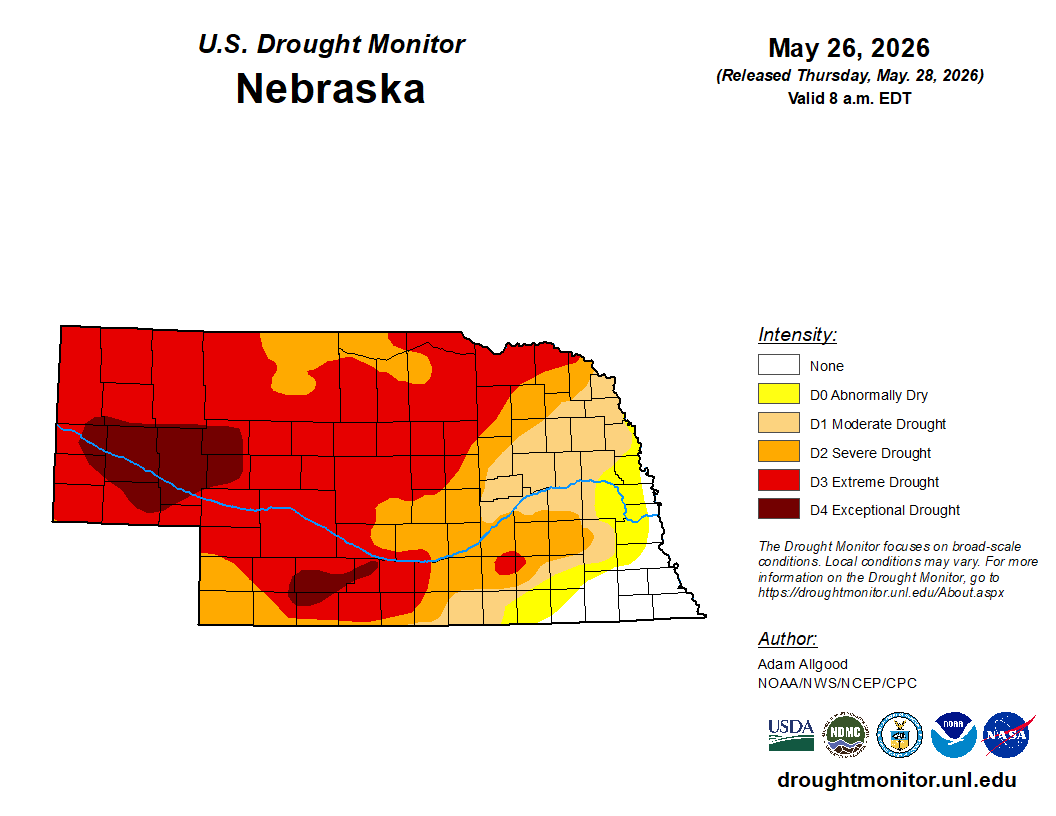
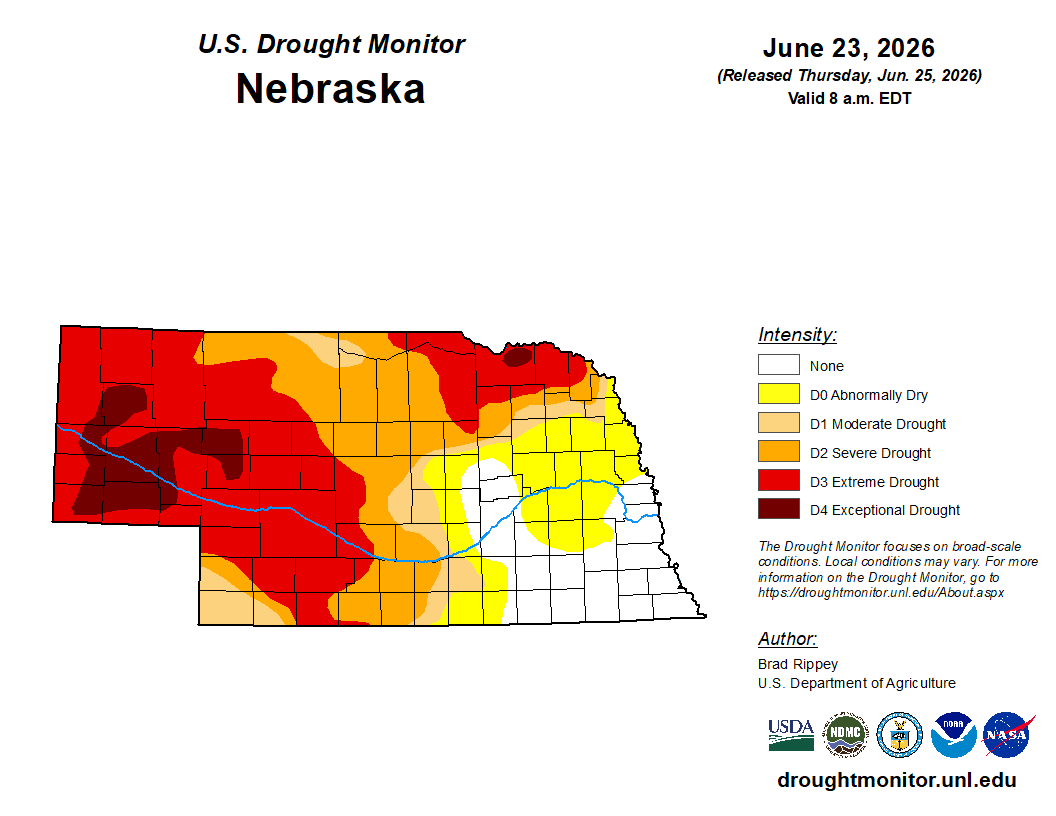
Exceptional Drought Persists in the Panhandle
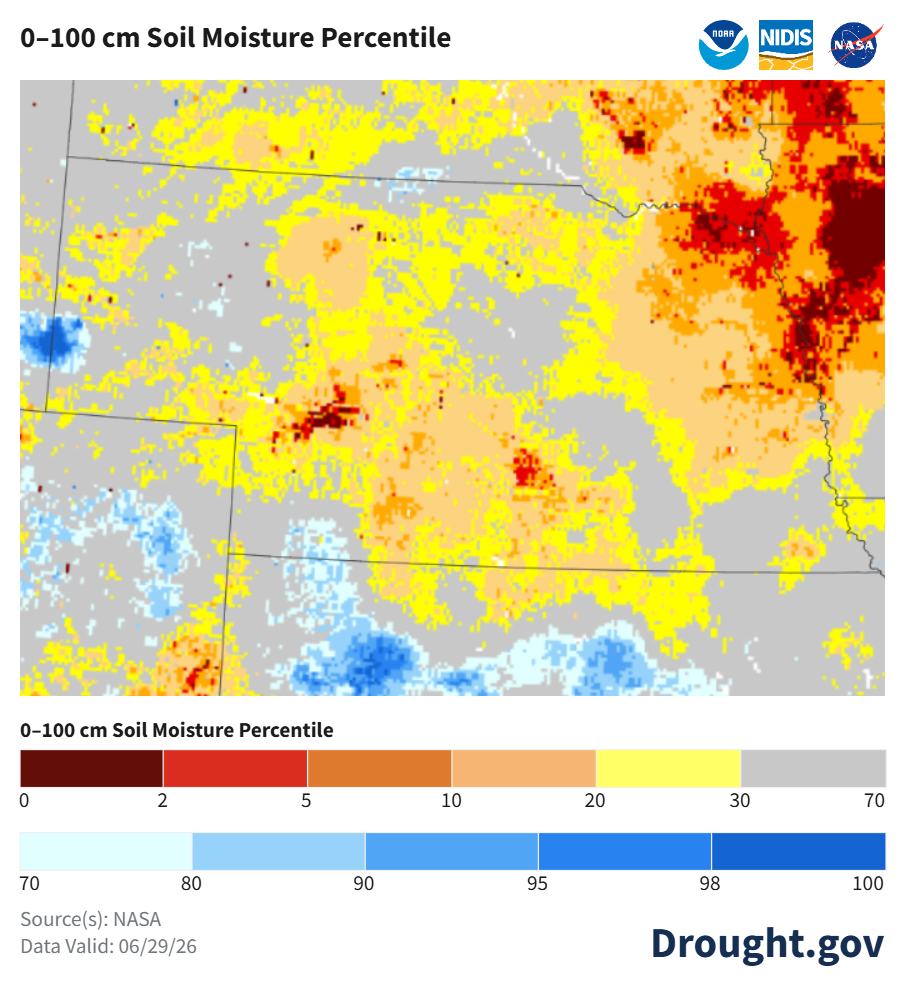
Eastern Nebraska had some relief from the drought in June. Lincoln NE, for example, had almost 9" of rain in total for May and June. Some homeowners have reported that their smaller trees and shrubs have yellowed from too much soil moisture while the western panhandle is still suffering with exceptional drought. Scottbluffs has only received a little over 4" of precipitation this entire year. Strong storms with large hail and 70+ mph winds struck the southern panhandle twice in the month of June, intensifying stress to trees already struggling with the effects of drought.

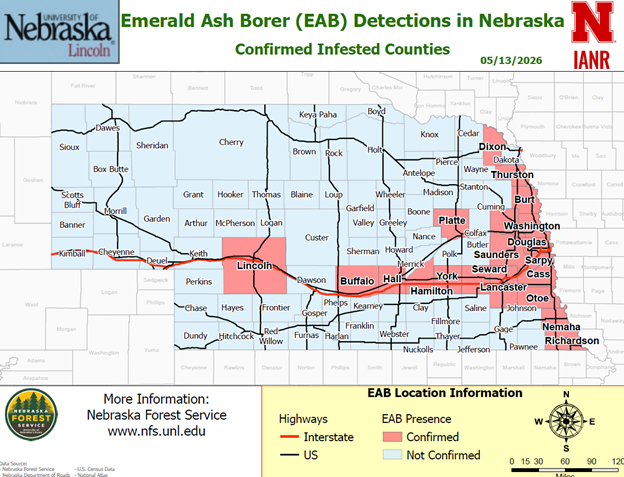
Current Emerald Ash Borer Detection Map
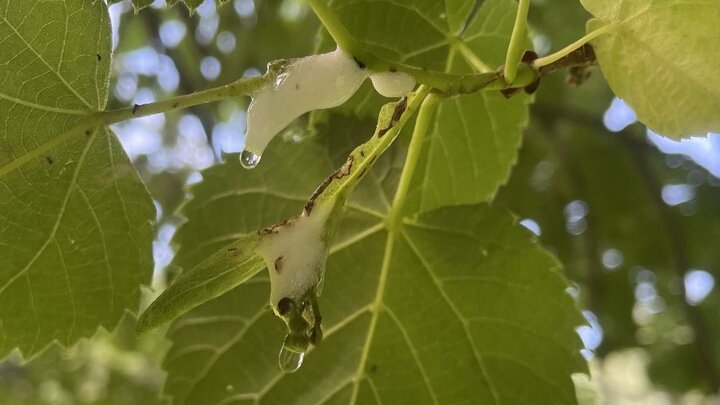
Spittlebugs
| The spittlebug, or froghoppers, can be found on a wide variety of host plants including grasses, flowers, trees and shrubs. Over 30 species are found in the U.S., the meadow spittlebug and the two-lined spittlebug are the most common in Nebraska. Similar to plant hoppers and aphids, spittlebugs have piercing-sucking mouthparts. Xylem tissue is their main food source but sometimes they can feed on phloem. The spittlebug gets its name by the foamy material the immature nymph creates using excrement and air. This "spit" not only protects them from predators but also as a tent for temperature and humidity control. Adult spittlebugs lay eggs in leaf material on the ground or on plants. The eggs overwinter and the nymphs hatch in April or May. Nymphs feed on plants and flowers for 5-8 weeks, molting several times before reaching maturity. Most common trees for spittlebugs are willows, juniper and pine but can be seen on others. Control is rarely necessary as this insect is usually present in low population numbers and natural predators help. |
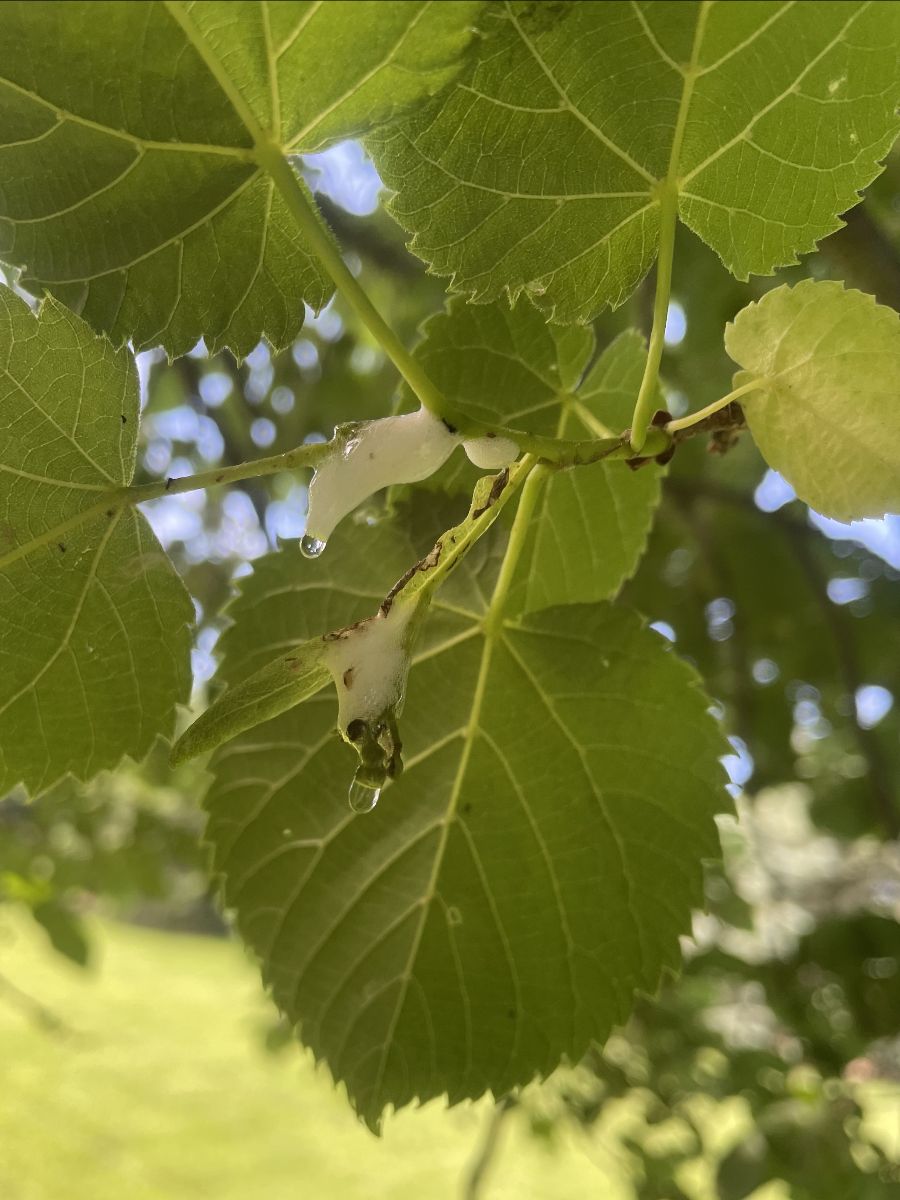
Picture supplied by Aron Lewis
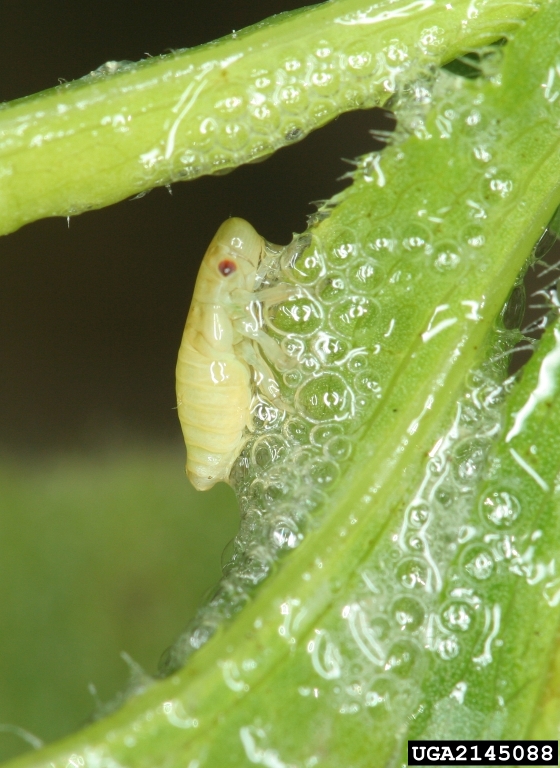
Picture supplied David Cappaert, Bugwood.org
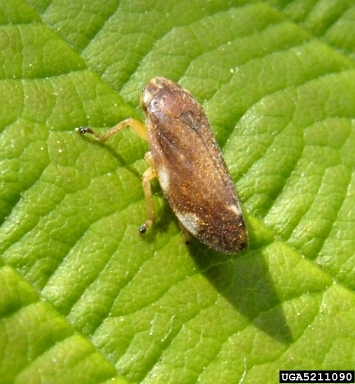
Photos Courtesy of Cheryl Moorehead, Bugwood.org
Bagworms
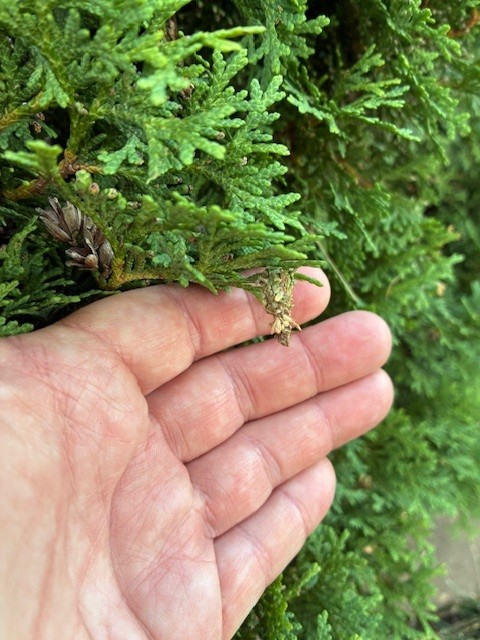
Photo courtesy of Jennifer Morris
Bagworms are caterpillars housed in a bag made of needle or leaf material. After egg hatch in the late spring/early summer the caterpillars and bags are very tiny. They can move by wind—called ballooning—and crawl. Bagworms are ferocious eaters and can defoliate a tree/shrub if present in high numbers. Male bagworms pupate in late summer, become a moth and search for females. Females never leave their bag and lay roughly 500-1000 eggs. Removing the bags before egg hatch helps to control the population. On larger trees and severe infestations, spraying the tree with Bt, Spinosad or other insecticides labeled for bagworms when the caterpillars are very small is also effective.
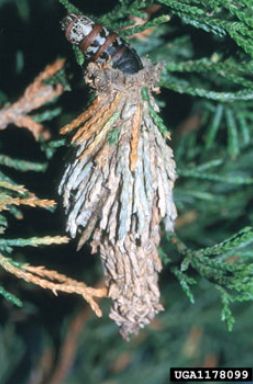
Photo courtesy of
Connecticut Agricultural Experiment Station , Connecticut Agricultural Experiment Station, Bugwood.org

Photo courtesy of Joe Boggs, OSU Extension


