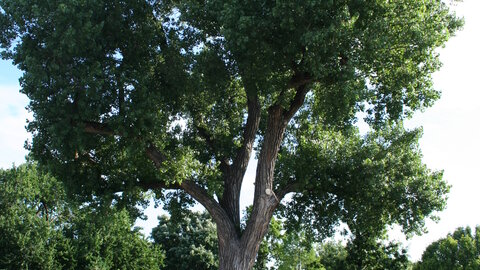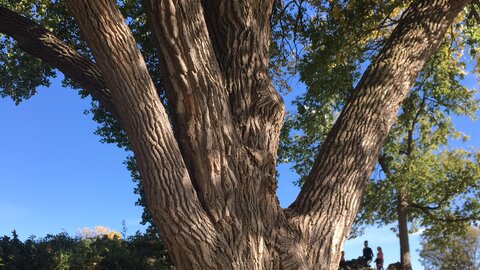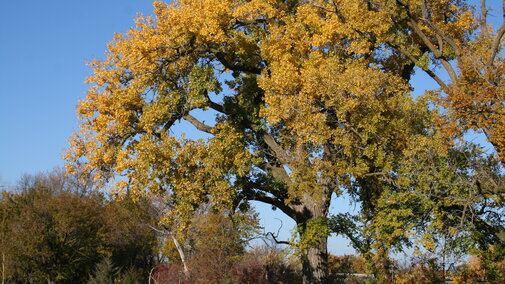
Populus deltoides
Where To Grow
Eastern cottonwood is the state tree of Nebraska and can grow in great abundance along streams and rivers and other wet areas. Cottonwood makes its best growth on moist, well-drained, fine sandy loams or silt loams. Coarse sands and heavy clay soils are not satisfactory. Though no longer in favor by most homeowners, this tree is well-suited for acreages, farms, parks, and natural areas. Suitable to plant throughout the state.
Size at Maturity
Tree Height Tree Spread 70-100' 60-90'
Wildlife Benefits
Seedlings and young trees are browsed by rabbits, deer, and domestic stock. Beavers use saplings and poles for food and dam construction. It is also vitally important to many important bird and insect species.
Additional Considerations
Though many seedless cultivars of the tree exist, few offer enough positive attributes to recommend them for planting. Instead, the best trees for planting are those that are grown from native seed or that occur naturally nearby. Just dig up a seedling or start one from a cutting in late winter.
Interesting Facts
Native Americans held cottonwood in high regard and it is thought that the leaves, fashioned into teepees by native children, were the inspiration for the teepee dwellings of the plains tribes. Our state's Champion cottonwood is also the National Champion. The Nebraska and National Champion eastern cottonwood tree is at the Lower Loup NRD’s Pibel Lake Recreation Area in southern Wheeler County!
Additional Images