
Exceptional Drought Persists in the Panhandle
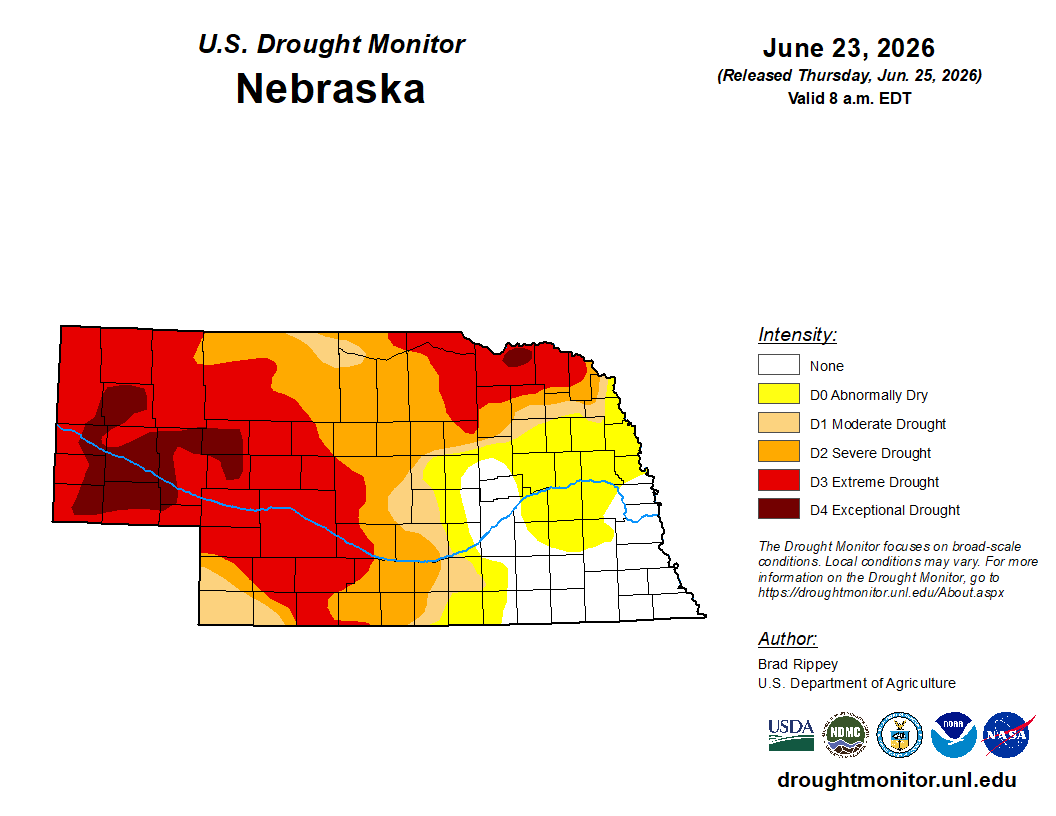
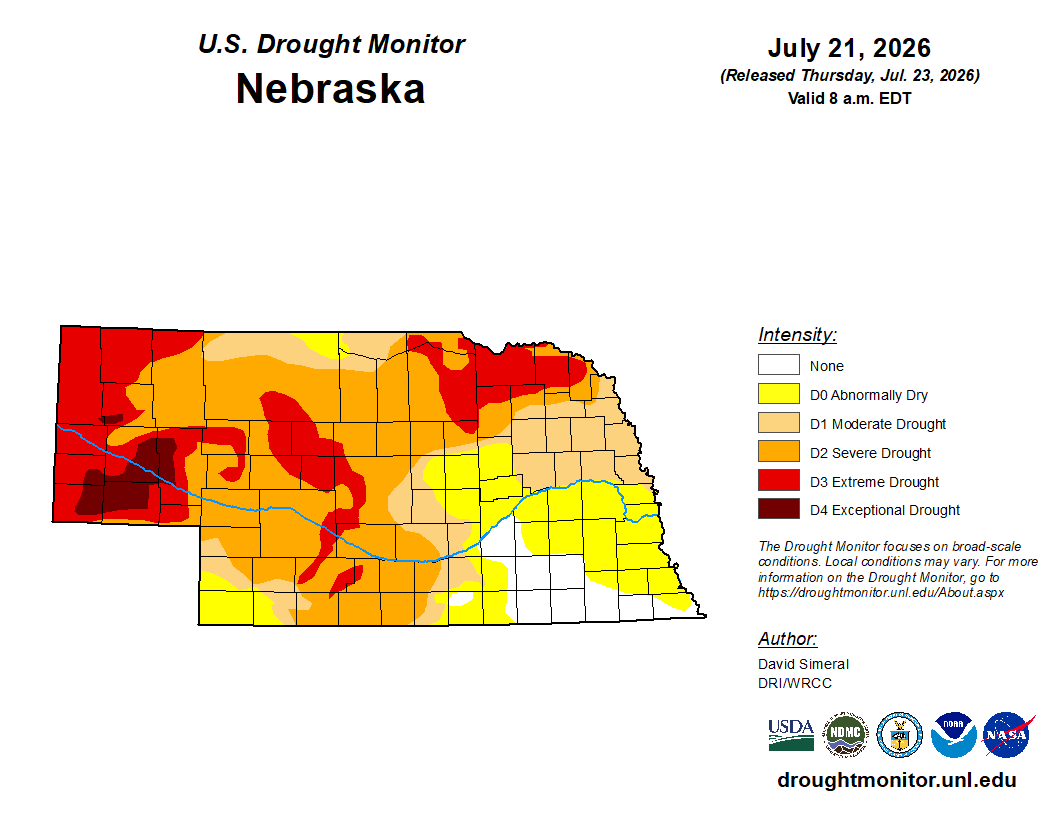
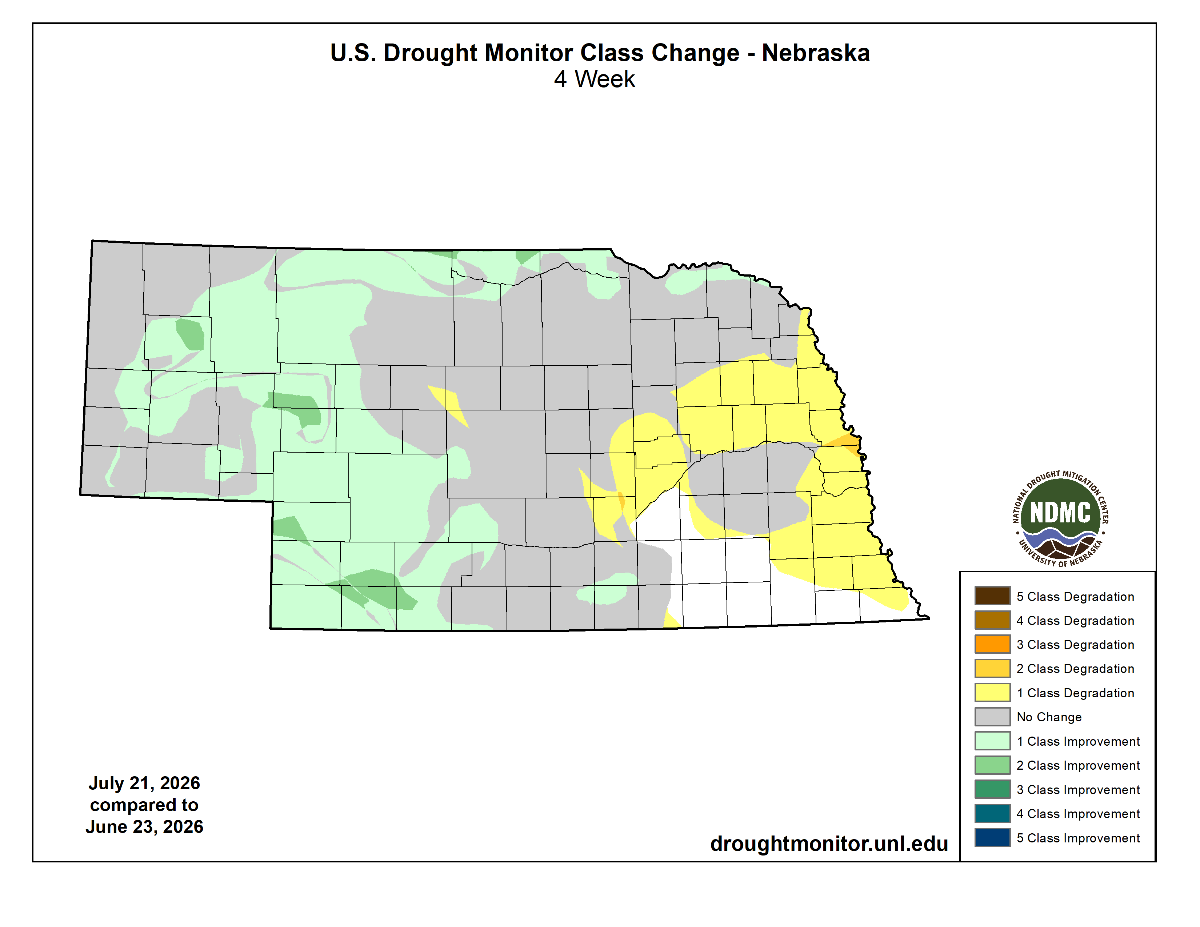
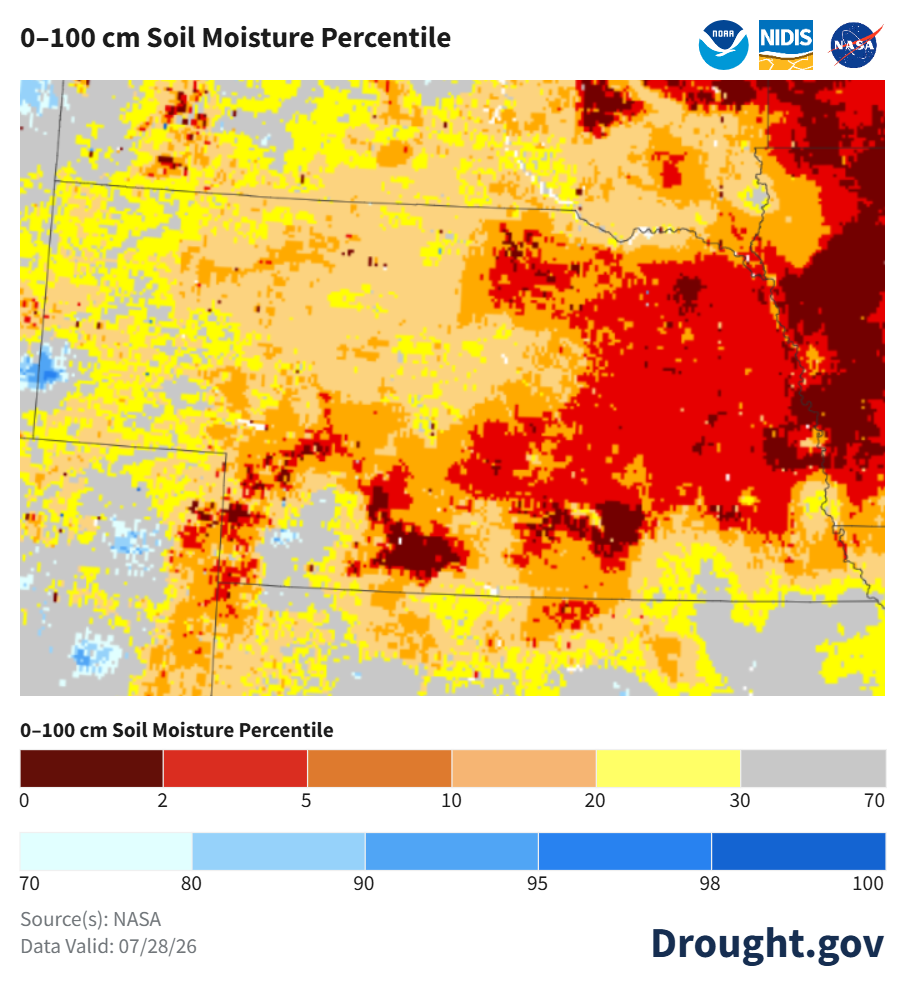
Eastern Nebraska had some relief from the drought in June but it was a short respite. The Westerrn panhandle is still suffering with exceptional drought. With no relief, Western Nebraska's trees will see continual drought stress inviting borers, bark beetles and canker diseases that could increase tree decline or death. If possible, water trees deeply during dry periods, even into the fall months if no moisture has arrived.
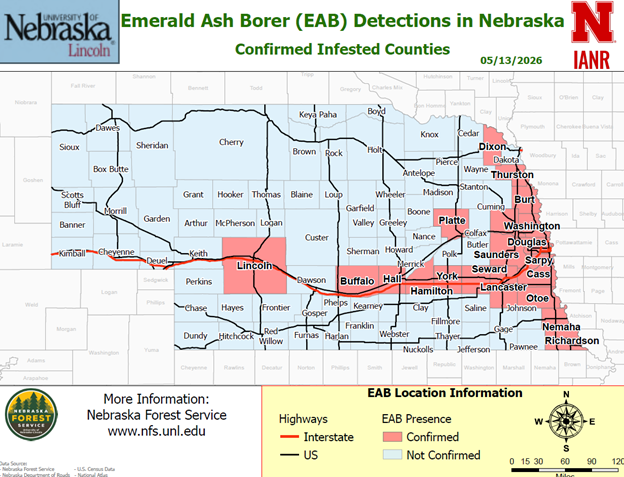
As of July 2026, the Emerald Ash Borer (EAB) has been found in 20 Nebraska counties, with more confirmed counties every year. Emerald Ash Borer Community Readiness and Response Plans provide guidelines for the processes and decisions involved in preparing for and addressing the introduction of the EAB in Nebraska communities.
EAB Readiness and Response plans are not only a great way to plan for the future of your urban tree canopy, but they also count towards 5 of the minimum 10 points for TreeCity USA Growth awards. If your local tree board wishes to add this single-use plan to your 2026 docket, and your 2026 Growth award application, the time is now to start the process. EAB Readiness and Response Plans must be adopted by your municipal council by Dec 31st, 2026 in order to be counted towards your 2026 Growth Award (awarded at the celebration in Summer/Fall 2027). However, plans completed and adopted after that, but before December 31st, 2027 would count towards the following year’s award points.
If your community wishes to pursue this specialized plan, reach out to your local community forester, or Forest Health Specialist Lauren Keefe for more information.
*Please keep in mind, part of this plan includes a current inventory of public Ash trees, so while a complete tree inventory in the past 5 years isn’t required, it can be incredibly helpful.
Thryonectria Canker on Honeylocust
Thornless honeylocut trees are a popular choice for urban landscapes due to their ability to thrive in stressful conditions. Thornless varieties have been known to grow in compacted, drier soils and can tolerate higher alkalinity and salt. These trees are not infallible, however. Hail damage, mechanical damage from string trimmers or mowers and other environmental factors like heat and extensive drought may make honeylocusts more susceptible to canker diseases or boring insects. One of the most common cankers of honeylocust in Nebraska is Thryonectria canker.
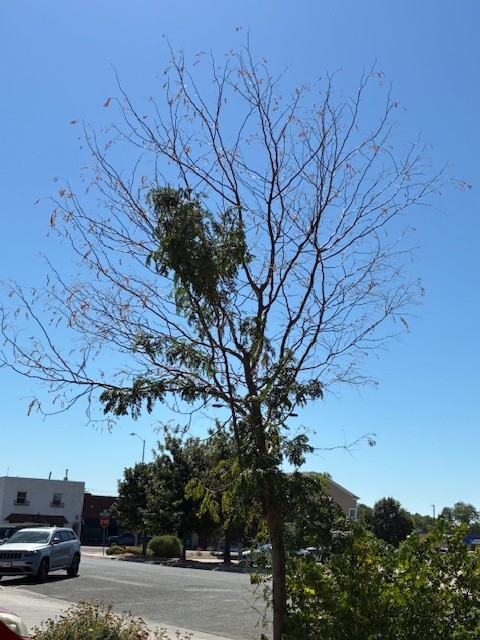
Picture supplied by Lauren Keefe
Thyronectria can infect pruning wounds, mechanical damage from mowing or string trimmers and bark damaged from sunscald. Cankers will appear sunken and have an orange discoloration at first. After the bark dies, the canker is lighter in color and can even change to lighter, yellow orange. Leaves may yellow and even wilt causing branches to die back. Fruiting bodies that develop under the dead bark break through and change from a pink color to almost black. A red stain may appear in the sapwood and even extend into the heartwood.
Thyronectria can kill the tree if severe enough to girdle the trunk. Early detection is crucial so if initial infection is only found on branches it can be removed. Prune infected branches 4-6" past the infection and sanitize tools with a 60-70% alcohol solution. Managing tree stress by watering and mulching and minimizing trunk damage will help in longevity.
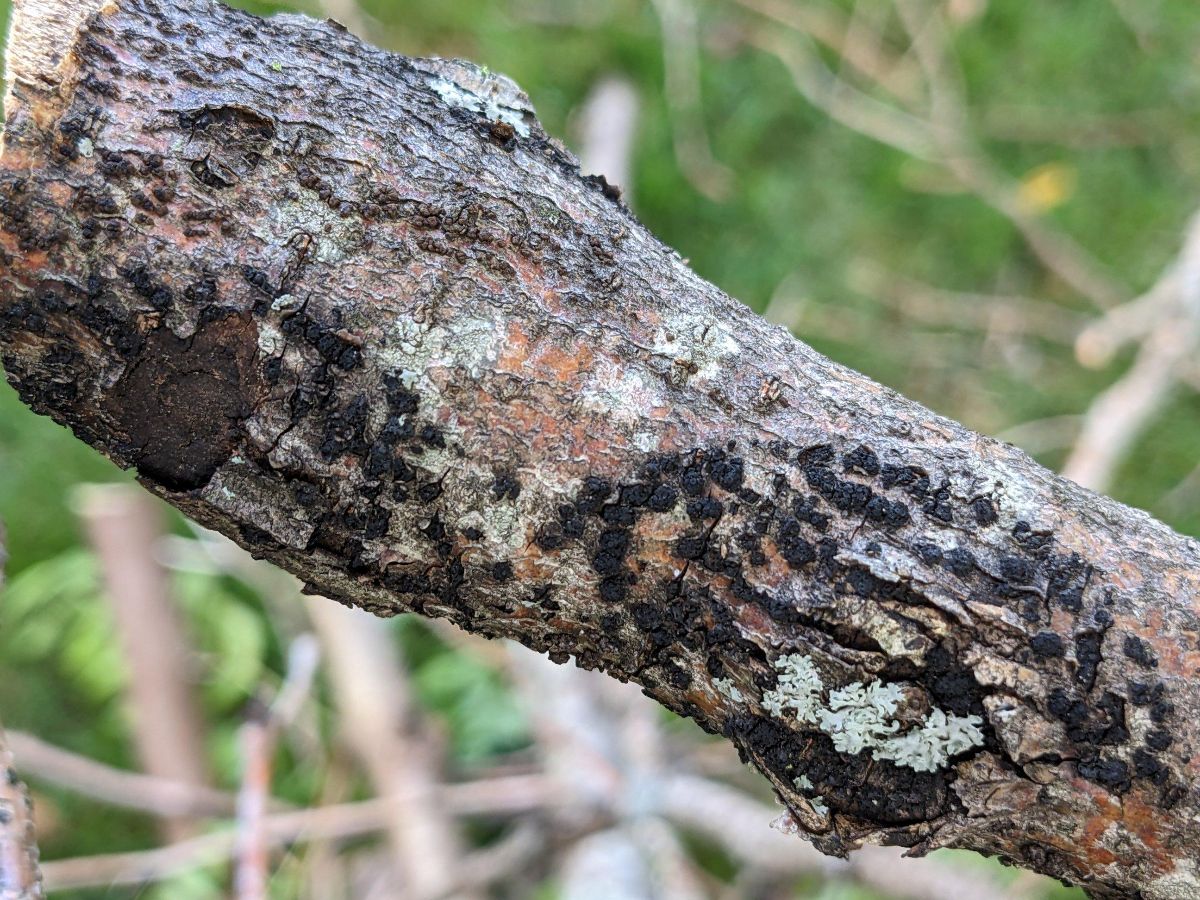
Picture Courtesy of University of Massachusetts Amherst, D.Hatton
Mimosa Web Worm
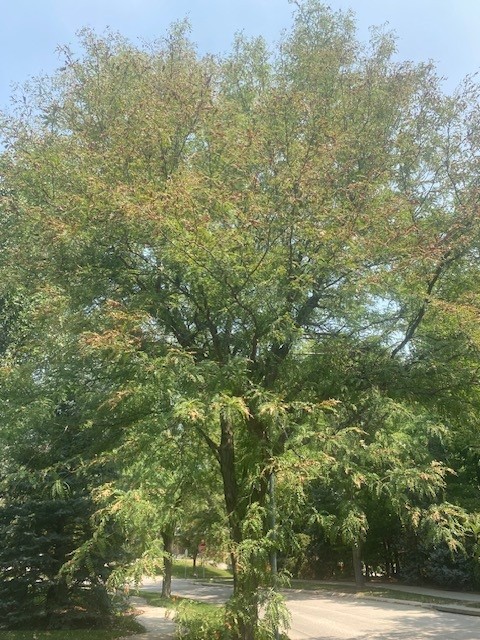
Photo courtesy of Jennifer Morris
Webworms are caterpillars that produce silken webs sometimes used to build larger structures for feeding sites and protection. Mimosa webworms are a common caterpillar on honeylocust trees. Browning or dead leaves can be seen clumped together by white silk. One to several caterpillars may be inside. Caterpillars can be dark brown to gray and even have a touch of pink.
Caterpillars hatch from eggs laid in foliage during June. They produce silk around foliage and start skeletonizing leaves. As the caterpillars get older, the silken webs surround larger areas. Trees can sometimes look completely brown if populations are high. As the season progresses, caterpillars will move down to the ground, pupate into adults who then lay eggs and a second generation is hatched in mid-summer.
This second generation causes the most damage during late July, August and September. A third generation is possible but is more likely in the southeastern regions of the U.S.
Control of Mimosa webworm can be quite difficult later in the season as chemicals may not penetrate the silken leaf masses. If control is necessary, it is best to do so in the early stages of infestation (June) during the first generation. BT, spinosad, permethrin or other products labeled for caterpillars will help.
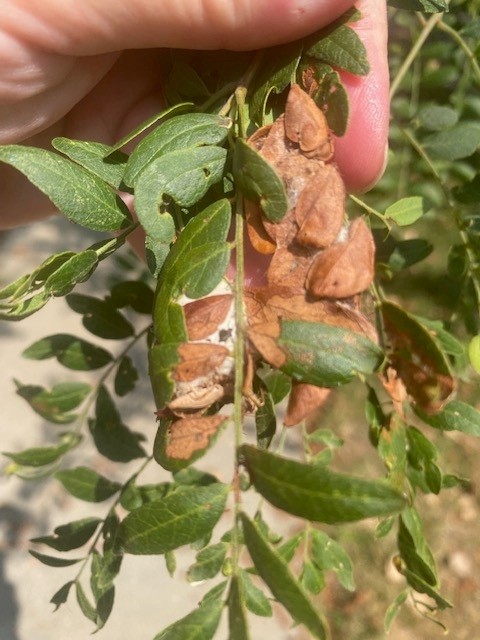
Photo courtesy of Jennifer Morris

Photo courtesy of Jennifer Morris

Photos courtesy of John A. Davidson, Univ. MD, College Pk, Bugwood.org

Honeylocust Spider Mites
Many species of spider mites are found throughout the U.S. While some spider mites can have hundreds of hosts like the two-spotted spider mite, some spider mites can be host specific. Spider mites can cause serious injury to plants when in high numbers.
Their piercing, sucking mouthpart extracts fluids like chlorophyl, causing stippling to leaf tissue, and decreasing plant vigor.
Honeylocust spider mites only infest honeylocust trees. The mites can be found mainly on the underside of leaf tissue and in high numbers during hot, dry conditions, the stippling created from feeding will have a bronzed color appearance. Trees heavily infested may yellow and have early leaf drop.
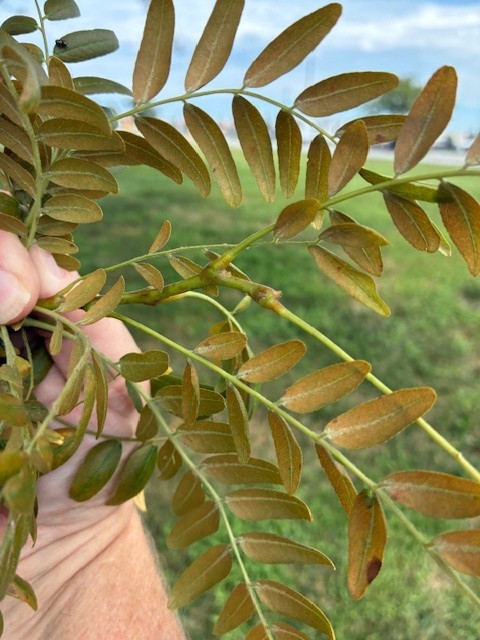
Photo Courtesy of Jennifer Morris
Honeylocust spider mites typically do not cause serious harm to trees and are considered mainly an aesthetic issue. Natural predators, if present will help in lowering populations of mites. If control is necessary, a dormant oil spray during the dormant season can help to smother overwintering eggs on the trunk and branches. Miticides labeled for spider mites will also help in lowering populations during the growing season. Rotating different types of miticides is imperative when spraying for mites as they can develop resistance to chemical overuse.
Pine Bark Adelgid
The pine bark adelgid, similar to an aphid, has a piercing, sucking mouth part that feeds on mainly white pine and limber pine though Austrian and scotch can be hosts. This adelgid produces a white cotton-like wax that covers its body. All pine bark adelgids are female. Once mature, the female will lay eggs in the strands of the wax and die. Four or more generations can be found in one year.
The insect pierces bark tissue to feed on phloem. This creates a sugary waste that the adelgid expels. High populations are rare, but when present can cause yellowing of needles and stunted growth, especially on younger trees. Control of pine bark adelgid is rarely necessary as natural predators keep populations low.
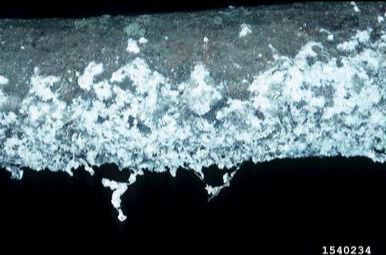
Photo courtesy of Lacey L. Hyche, Auburn University, Bugwood.org
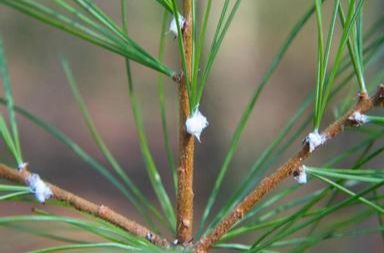
Photo courtesy of Tome Coleman, USDA Forest Service, Bugwood.org
Whooly Apple Aphid


Aphids are a large group of insects that feed on a wide variety of plants. The "whoolly" species are called such because of the waxy threads the aphids create for protection around their bodies.
Aphids have piercing sucking mouth parts that feed on phloem tissue. In high numbers, aphids can cause a lot of damage to plants by yellowing and wilting of foliage, and overall loss of vigor. Aphids also attract sooty mold on plant tissue because of the large amounts of honeydew (sugary insect excrement) the aphids produce.
Whoolly apple aphids not only feed on shoots, stems and trunks can also feed on root tissue of apple and crabapple trees during part of their life cycle. Wingless nymphs will overwinter on the roots, then feed on the phloem of the roots in the early spring. The nymphs then produce asexually and the young will crawl up the trunk to start feeding. Large populations can damage apple and crabapple roots leaving trees weakened and stunted. Heavy colonization of these aphids on shoots/branches can cause yellowing and early leaf drop.
Natural predators can control whoolly apple aphid but if higher populations are impacting crop yeild and over all tree health, using a horticultural oil in the spring once young nymphs emerge from the roots will help. Products labled for root feeding aphids that offer a systemic and are safe for edible fruit will also help throughout the growing season.
Magnolia Scale

Photo Courtesy of Mike Payne, Davey Tree
Scale insects are a diverse and numerous groups of insects. Scales have sucking mouthparts that suck nutrients out of tree tissue. In some cases, damage is minimal and chemical treatments are not necessary. Often natural predators and parasites control the populations of the insects but sometimes scales can heavily infest a tree to the point of dieback, creating the need for more aggressive control.
Scales are classified into two categories - soft scales and armored scales. Soft scales feed from the phloem tissue of plants, causing them to excrete honeydew, a waste product highly sweet that attracts other insects and mold. Soft scales also can develop a waxy layer over their body protecting them from predation. Armored scales feed from mesophyll cells of plants, do not excrete honeydew and develop a hard, detachable outer shell for protection.
Magnolia scale is a soft scale that is very easy to spot due to its large size. Mature females can reach 1/2" in length. Adult females look like raised, circular bumps that have a coral or pink hue. Large populations of this scale insect can create heavy amounts of honeydew, attracting flies, wasps and bees. Sooty mold may be an issue with this insect.
Females lay eggs underneath their bodies. Eggs hatch and crawlers begin to move to new areas from July through September. In high numbers, this scale can cause leaf yellowing, defoliation and if infestations continue yearly, branch dieback. Continuous yearly chemical control of systemic neonicotinoids and imidachloprid over time can result in resistant populations. Overhead sprays of insecticides may also lower the populations of beneficial insects and other predators that feed on scale. If populations are severe, using a combination of dormant oil in the fall and/or spring with a systemic insecticide of an insect growth regulator like pyriproxyfen may help in lowering scale populations and have little impact on beneficial predators. Keeping trees watered during drought and lowering other stressors will also help in scale attack.


