
Extreme Drought Expanding
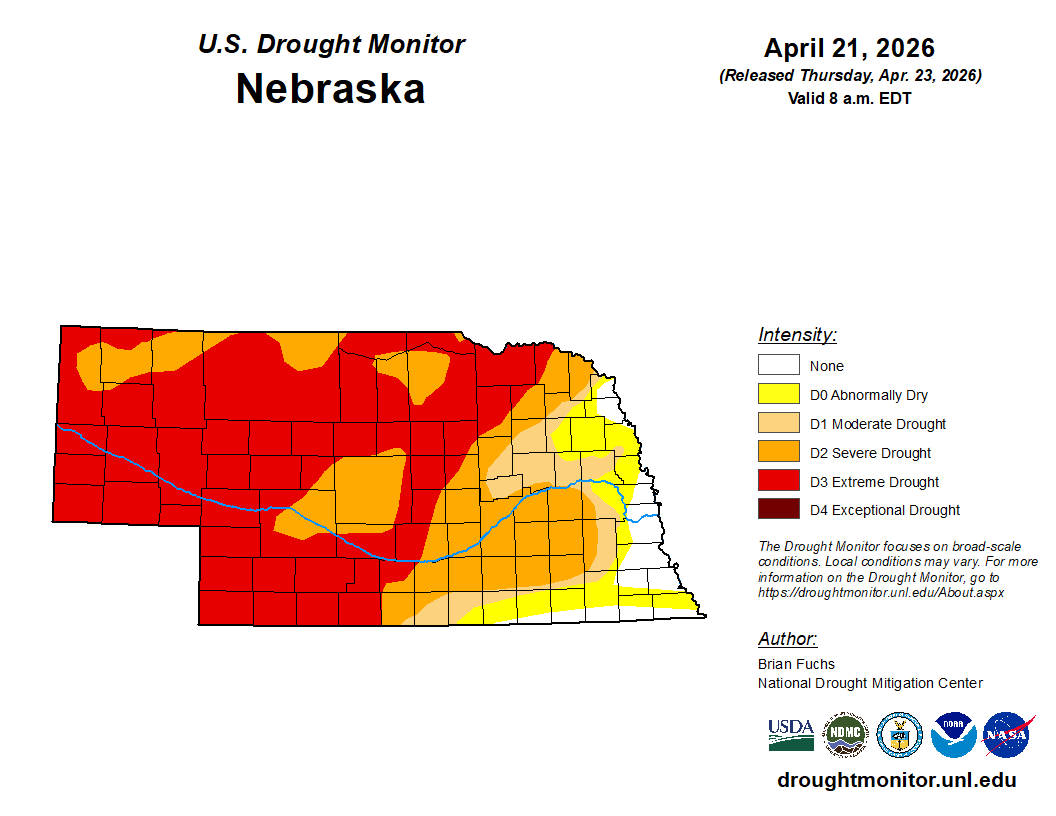
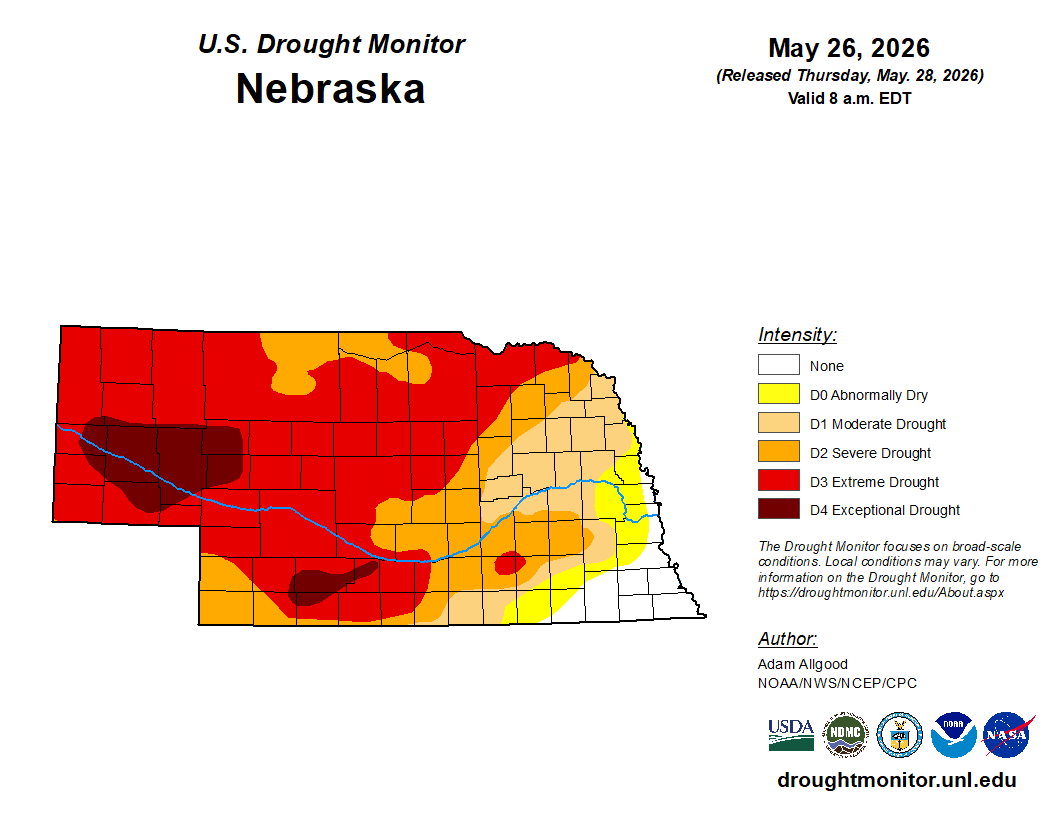
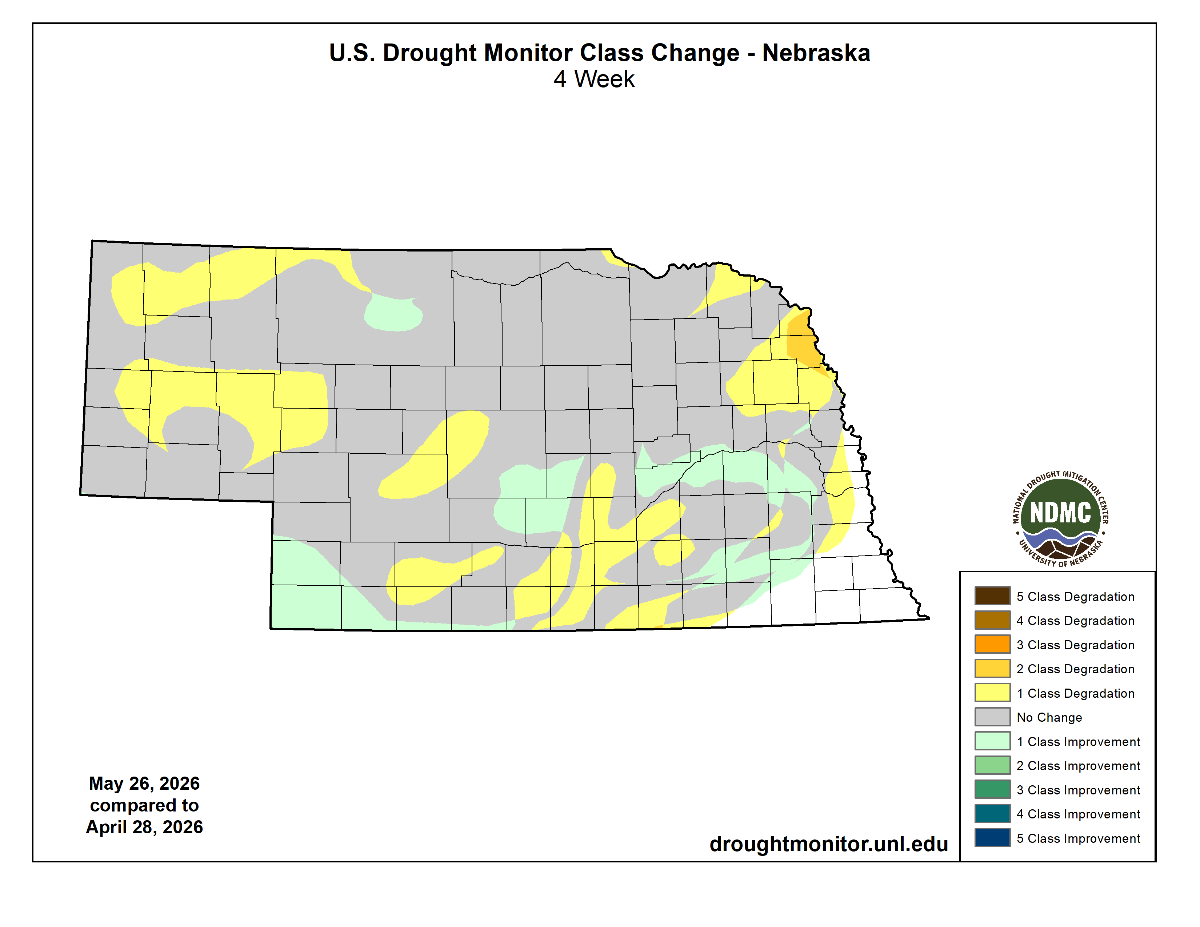
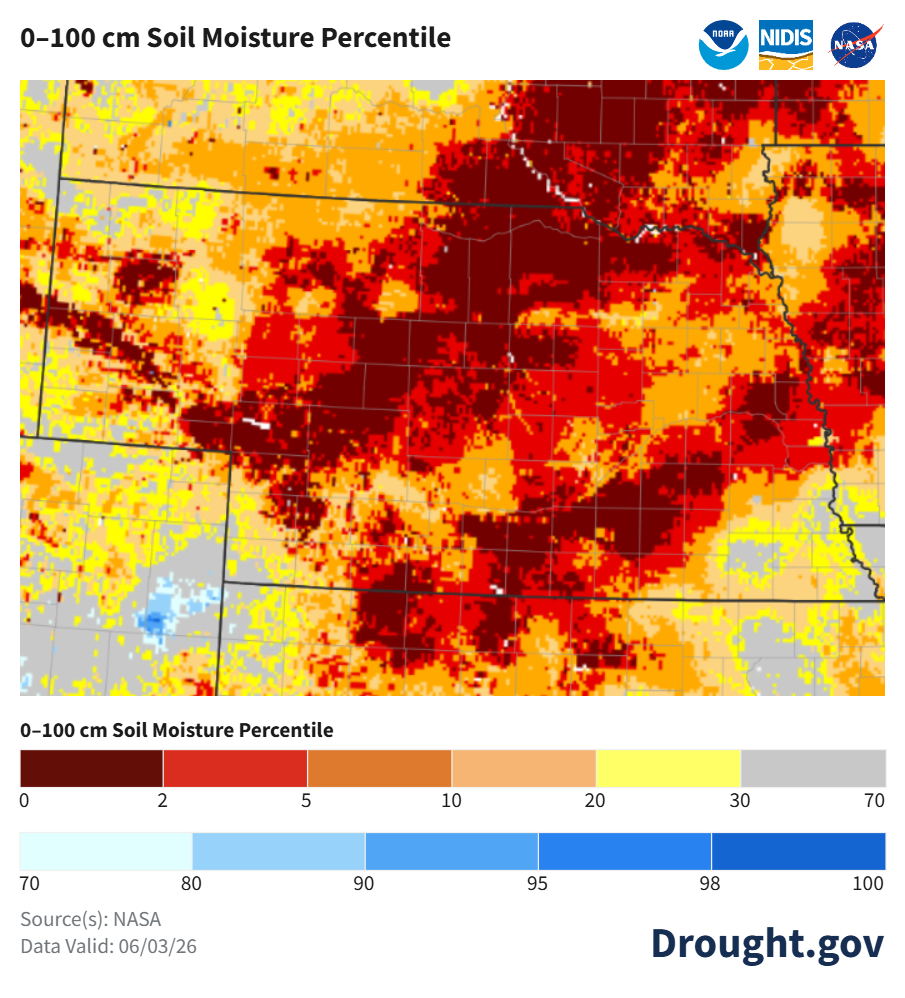
Although an increase in rainfall occurred this month along with storms impacting the southeastern portion of the state, most of Nebraska is in moderate to extreme drought. Pockets of exceptional drought have now developed in the western portion of the state. If this pattern continues, it is more likely that borers, bark beetles and canker may play a role in additional tree stress and decline.
Late Freeze Affects Leaf Emergence Western Nebraska - April Revisited
In the April Forest Health Report, we covered freeze damage from a late freeze during the weekend of April 18th in western Nebraska. Lauren Keefe, Western Forest Health Specialist returned to an ash suffering from freeze damage that was showcased in pictures last month. She took pictures to update us on how the ash is recovering. Below is the recap of what was discussed in April and the updated photos:
Not only do trees in western Nebraska have to combat droughted conditions and fire, but they also had to contend with a mid-month freeze. Higher than normal temperatures in February and March caused early bud swell and, in some cases, early leaf emergence. During the weekend of April 18th, temperatures reached low enough and long enough to cause freeze damage on bud and leaf tissue.
Lowering additional tree stress can help the tree as it recovers. Watering and mulching will help. We advise to wait on applying any fertilizer and to wait on pruning out damage (unless hazards are apparent).Trees can be more resilient than we think and may recover just fine.
Ash tree freeze damage, Scottsbluff, NE April 2026
Photos Courtesy of Lauren Keefe:


Ash tree freeze damage recovery, Scottsbluff, NE May 2026
Photos Courtesy of Lauren Keefe:
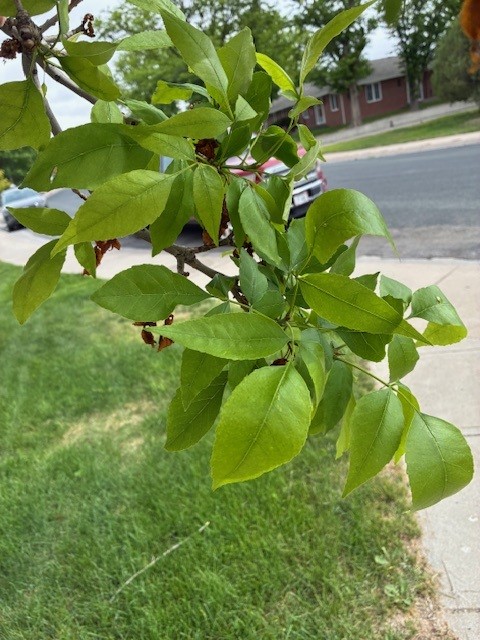
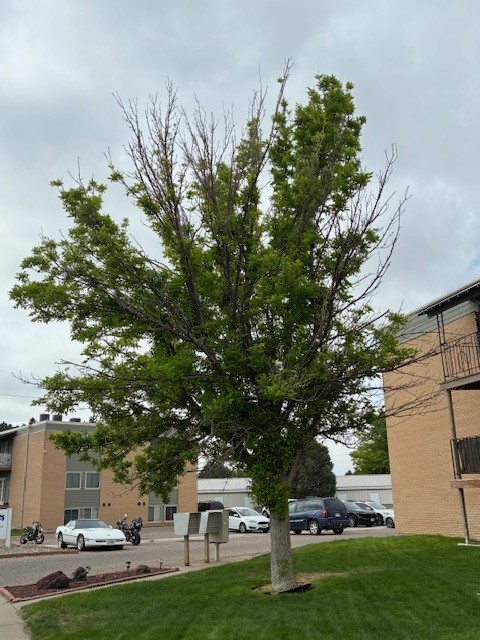

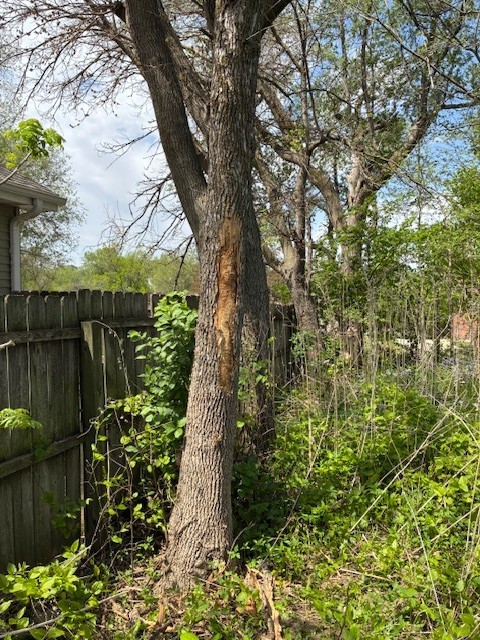
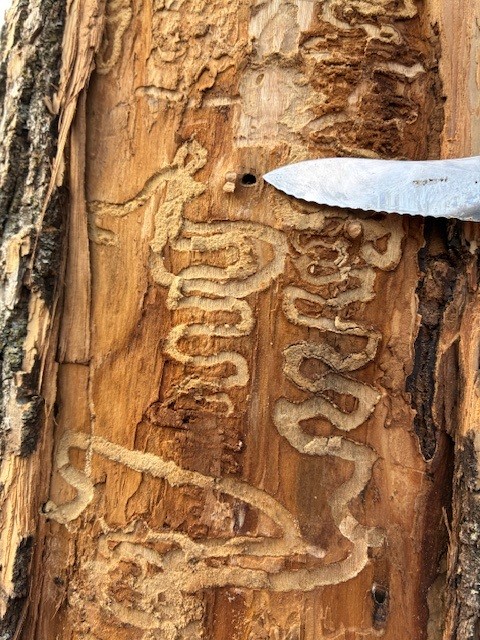
Dead Ash Tree in Winnebago, NE
Photos Courtesy of Jennifer Morris:
Spruce Needleminer
Spruce Needleminer (Taniva albolineana) is an insect that infests spruce trees across the north half of the U.S. In Nebraska, Colorado blue spruce is the main host.
The adult needleminer is a moth, present in May and June and lay eggs on the underside of needles. After hatching, the larvae tunnel into needles, entering at the needle base. A single larva may feed in more than one needle. As the larva grows in size, it cuts off the mined needles and spins silk strands to tie the needles and frass together into a webbed “nest.”
Larvae will feed throughout the summer and stop feeding with the onset of winter, spending the winter in a cocoon of matted webbing and needle debris. When spring arrives, larvae resume feeding and the cycle begins again. Although not found very often, spruce needleminer may stunt branch growth and may cause needle defoliation if populations are high. Typically, if needleminer is present, most of the damage is minor and does not pose any health concerns to the tree. Chemical control is usually not necessary.
Spruce Needleminer Adult Moth
Picture supplied by Laurie Stepanek:

Spruce Needleminer Mining Holes, Frass and Webbing
Picture supplied by Laurie Stepanek:

Dead needle cluster caused by spruce needleminer
Photos Courtesy of Laurie Stepanek:

Apple Flea Beetle

Notice the green color of the beetle and the holes of the leaf caused by feeding
Photo courtesy of Laurie Stepanek:
Flea beetles are a small insect that get their name from the larger hind legs allowing them to jump when disturbed like a flea. There are hundreds of species of flea beetles in the U.S. Flea beetles infest a variety of plants, including trees, flowers and even leafy greens and vegetables.
Apple flea beetle adults have many hosts including crabapple, grape and wild rose. In the spring the adult female will lay eggs, typically on evening primrose. Once hatched the larva will feed on the underside of leaves and give the leaves a lacy appearance. The larvae will crawl down to the soil to pupate, and adults emerge a few weeks later.
Cultural or chemical control of apple flea beetle is usually not necessary as many natural enemies are present to help in population control.


